So, I promised to look back at why I’ve embarked on a self directed study of the Early Modern dramatists in English, Shakespeare’s contemporaries. I think my first exposure was back in high school when I had about Doctor Faustus and I read Marlowe’s play. 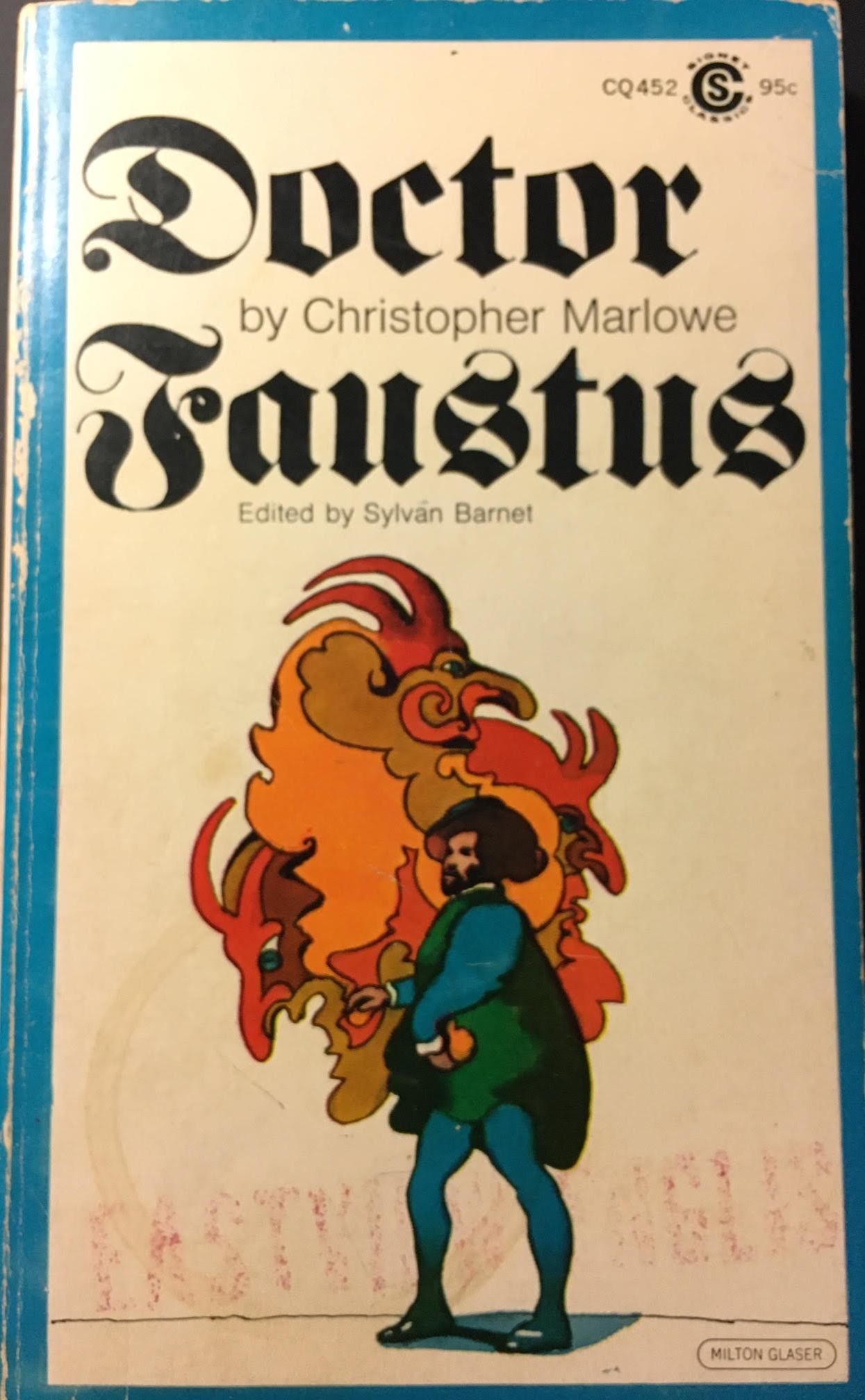 I recall being actually frightened by it. It must have been the Faustus’ ultimate fate that I found alarming–the knowledge that salvation was no longer available to him.
I saw a production of the Shoemaker’s Holiday in Toronto, Toronto Arts Productions at the St. Lawrence Centre I think it was, and recall almost nothing about it. I believe there was an actor playing Queen Elizabeth, and she was stately and severe but guffawed. I’m pretty sure that I understood none of the story.
I don’t recall much mention of the Early Moderns during my university days. We were told that Shakespeare was working within an environment of talented and popular competition, but other than Marlowe, I don’t recall other names being mentioned. I knew there were other plays, because I know The Shoemaker’s Holiday existed.
Over the years, one has heard the stories about who wrote Shakespeare’s plays. Various names crop up, and I was never interested enough to pay much attention (thinking the whole thing a crackpot conspiracy theory that doesn’t even have the decent scandal to justify it) but heard some of the names of the contemporaries. I did visit Edward de Vere’s castle once, because it was near my brother-in-law’s home and made for a nice outing.
So I had a vague sense that the world of the early moderns was there, it was simmering, and possibly interesting. A few years back, I attended a reading of The Spanish Tragedy hosted by David Prosser of the Ontario Stratford Shakespeare festival, and it was great fun. I knew more by then and that The Spanish Tragedy had more that a little influence on Hamlet.
A Little over a year ago I did a play with the University of Toronto’s Poculi Ludique Societas, The Dutch Courtesan, an 1605 city comedy by John Marston. As an undergrad I’d seen a couple things from this group: Everyman; and a complete staging of the N Town Cycle. They seemed like a right raucous crew. The production was part of a larger academic event and is somewhat recalled by the website above.
What I expect to get out of this study: I’ve been making the same joke for years, saying reading Shakespeare’s contemporaries is valuable because it reminds how much better he was than his competition. There’s something to that, but it’s not entirely true. What I hope to find are the contexts within which Shakespeare was working, many of which he did not devise. As an example, the use of pageant or parades as dramatic devices, or the matter of belief with regard to ghosts and their depiction. While I believe that Shakespeare reigns supreme with regard to creating characters with deep and distinctive psychologies, I am wondering why he decided to put THAT on the stage, when the competition was concerned with other things. Clearly is was an exciting time for innovation and experimentation, but a theatre audience can only be pushed so far. They have to be lead to things. I’m not so interested in the mindsets of the various classes of Elizabethan or Jacobean societies, but it what they would and could accept in the drama.
I have a particular interest in the uses and styles of humour as well.
 Links You Minx
Leave a comment